What is social onboarding? How would it work? Why should it be used?
Social onboarding is a method of engaging new employees with other employees throughout the organization and can be done in a number of ways from pre-employment, through a deliberately built onboarding plan and through unstructured interaction between employees.
Social onboarding is something that I believe should be used because it
goes well beyond the more logistical and compliance components of an
onboarding process. These components of onboarding are the easy ones to
measure such as completion of formal new hire orientation and
compliance courses, reviewing policies, signing a code of conduct, etc.
When thinking about a speed to proficiency in a new position, these
formal pieces give little context about the new position and the work to
be done. These more logistical activities in fact, are more of a
benefit to the employer rather than the employee in the sense of
compliance risk reduction. Additionally, these are largely solitary
activities with little or no social interaction, thus negating much of
the excitement and energy that current employees may be just waiting to
share with their new colleague.
Social onboarding can be done a number of ways including an interesting concept of engaging new employees prior to their first day. Two recommendations for doing this include: offering access to an online knowledge base where many FAQs can quickly be answered and additional less formal information about the organization can be found; and inviting the new employee into an internal social network if possible.
There are many benefits of social onboarding where it is a win-win for the organization and the new employee. Some of these include connecting new employees with resources, with colleagues, and with the actual behavior component of the organizational culture. Further, there are a number of statistics from various research reports about the cost savings and other benefits for the organization of retention of a new employee. But retention is a two-way street, not just something that benefits the employer, an employee who stays at a job and is engaged, is also not going to be going through the disruptive and uncertain experience of job seeking, which may include financial uncertainty, stress and costs in both money and time during the application and interviewing for new positions.
In getting to an engaged and retained employee, the best way is though their work where most of their learning will occur and interaction with others occurs. This leads to another area where social onboarding can be valuable is through a social recognition program where actual on the job actions and behaviors that model and spread examples that are consistent with the organizational culture.
So social onboarding is more than just a series of steps to complete once an employee joins an organization, it is a series of interactions with both online and in-person social encounters. This can occur as early as even prior to beginning their first day of employment and can continue indefinitely after joining an organization. It can work with access to online social resources such as knowledge databases, internal and external social networks. It can also be promoted through a recognition program where interaction and behavior that is conducive to the organizational culture is rewarded and championed. And social onboarding should be used because it is both a path to job proficiency and a route to engagement.
Connected Culture

Sunday, May 31, 2015

Tuesday, May 26, 2015
Culture Acquisition
Thus far, a common thread through this blog has been along the line of culture adoption. This post will look a bit further into the acquisition of an organizational culture. When thinking about acquiring a culture, there are two distinct areas that I am specifically considering: one organization acquiring another with its distinct culture; and an organization actively acquiring a new and different culture without an acquisition of an organization involved.

When an organization acquires another, an often overlooked or underestimated dynamic is the people and culture of the group being acquired. There are several ways that these acquisitions can be done including completely assimilating an organization inside of another as a single larger organization; as a fully integrated subsidiary where some individual organizational identity and structures remain, while others are integrated; and a non-fully integrated (NFI) subsidiary, where the organization acquired is maintained as a separate entity in most or many regards. Often this third form, the NFI has a culture or unique characteristics that are part of its value proposition and if that organization is fully integrated, there could be a significant loss of market differentiation, product or customer identity, or other factors. Intertwined in this is the distinct culture of the organization and the people being acquired through the transaction as employees.
There are many ways to incorporate two or more organizations as mentioned above as well as a number of recommendations about how to do so, such as this 6 Ps method, which starts with a focus on the people of an organization.
So if we are looking at acquiring organizations and thus also acquiring a culture, how do we acquire culture as individuals? Well, this is an important question...and it gets at one of the underlying questions of this blogging exercise.
While this post was briefly about the acquisition of cultures/organizations, future posts will continue to explore the chicken versus egg question about what comes first, a culture that is conducive to connecting or connecting with others that develops a culture and in each case, how this may occur within an acquisition will be briefly explored as well. ?
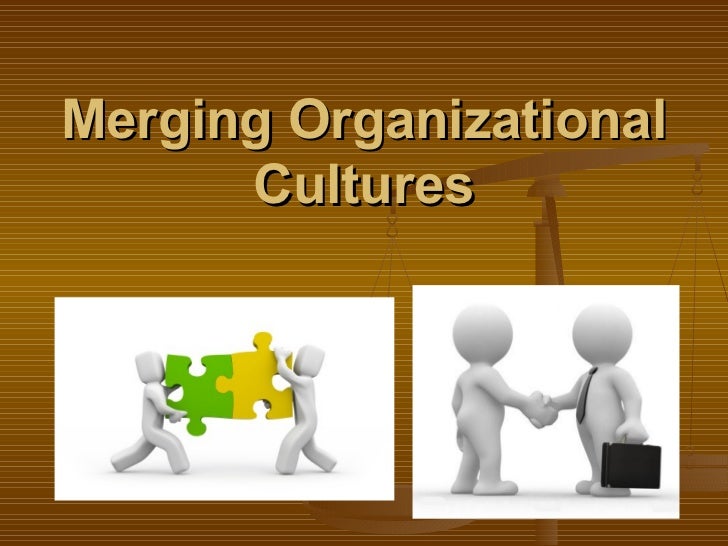
When an organization acquires another, an often overlooked or underestimated dynamic is the people and culture of the group being acquired. There are several ways that these acquisitions can be done including completely assimilating an organization inside of another as a single larger organization; as a fully integrated subsidiary where some individual organizational identity and structures remain, while others are integrated; and a non-fully integrated (NFI) subsidiary, where the organization acquired is maintained as a separate entity in most or many regards. Often this third form, the NFI has a culture or unique characteristics that are part of its value proposition and if that organization is fully integrated, there could be a significant loss of market differentiation, product or customer identity, or other factors. Intertwined in this is the distinct culture of the organization and the people being acquired through the transaction as employees.
There are many ways to incorporate two or more organizations as mentioned above as well as a number of recommendations about how to do so, such as this 6 Ps method, which starts with a focus on the people of an organization.
So if we are looking at acquiring organizations and thus also acquiring a culture, how do we acquire culture as individuals? Well, this is an important question...and it gets at one of the underlying questions of this blogging exercise.
While this post was briefly about the acquisition of cultures/organizations, future posts will continue to explore the chicken versus egg question about what comes first, a culture that is conducive to connecting or connecting with others that develops a culture and in each case, how this may occur within an acquisition will be briefly explored as well. ?
Sunday, May 17, 2015
Onboarding a Culture
Can a culture be onboarded? Does onboarding and learning through a brief or extended period of time about the underlying beliefs, expectations of conduct, and values translate into adoption of the organizational culture? What role should onboarding play in disseminating an organizational culture to new employees?
Some of these are difficult questions for sure. I will at least give one answer to each of these, though there may be many other opinions and thoughts that others have about these questions and answers to them.
First, I want to get the "cop out" answer out of the way. The easiest answer is that every organization is different so there will inevitably be a different answer for each question based on the specific organization. While this answer may be true, I am seeking something more substantial in this investigation even if not applicable to all organizations.
Can culture be onboarded?
- Yes, I believe culture can be onboarded, at least to an extent and that extent is worth the effort that it takes in preparation and planning for the onboarding. If an organization has a distinctive culture, I believe that it can be onboarded to new employees. If an organization thoroughly lives their culture, this may be easier in some instances because they would likely hire people who are more receptive to their culture. One of the fun examples that I found is in this employee handbook...yes, I said employee handbook but I think that this definitely an example of how a new employee could gather insight about a culture while being onboarded with a very formal technique such as a handbook. And in that example from Valve Software, I would be confident that the talent that they attract is open to this culture. After seeing the video about their handbook and reading some of the employee info from their webpage seems to confirm this.
Does onboarding and learning translate into adoption of the organizational culture?
- Yes, it can translate into adoption of the culture. Avoiding another cop out answer of "it depends" or "not for everyone," I do believe it can help lead to adoption. Something that can be helpful for all employees is to get networked throughout the organization and the earlier the better possibly in an onboarding. In this article about leadership positively impacting culture in the point about networking creating "smoking rooms" may be something to incorporate into an onboarding experience that could further cultural adoption. Of course there are other examples and ways to spread a culture such as this example of building a sense of ownership in the company that is mostly distinct and separate from onboarding.
What role should onboarding play in disseminating a culture to new employees?
- I will posit that social learning in an employee onboarding should play a role in sharing the culture of an organization. Though there are intricacies within this. What is social learning? There is a definition here and another here. Using the definition from Tony Bingham in the first of those links, the final piece of his definition are the words "information sharing, collaboration and co-creation." While this article has a few examples of some more formal examples, they are not strictly formal such as a classroom or handbook and the spirit of these examples definitely move further in the direction toward social learning.
So are all of these answers self-serving? Perhaps to continue this blog the answers to the questions had to be affirmative, though I believe that these are true and yet would still need massaging to apply to any given organization.
Some of these are difficult questions for sure. I will at least give one answer to each of these, though there may be many other opinions and thoughts that others have about these questions and answers to them.
First, I want to get the "cop out" answer out of the way. The easiest answer is that every organization is different so there will inevitably be a different answer for each question based on the specific organization. While this answer may be true, I am seeking something more substantial in this investigation even if not applicable to all organizations.
Can culture be onboarded?
- Yes, I believe culture can be onboarded, at least to an extent and that extent is worth the effort that it takes in preparation and planning for the onboarding. If an organization has a distinctive culture, I believe that it can be onboarded to new employees. If an organization thoroughly lives their culture, this may be easier in some instances because they would likely hire people who are more receptive to their culture. One of the fun examples that I found is in this employee handbook...yes, I said employee handbook but I think that this definitely an example of how a new employee could gather insight about a culture while being onboarded with a very formal technique such as a handbook. And in that example from Valve Software, I would be confident that the talent that they attract is open to this culture. After seeing the video about their handbook and reading some of the employee info from their webpage seems to confirm this.
Does onboarding and learning translate into adoption of the organizational culture?
- Yes, it can translate into adoption of the culture. Avoiding another cop out answer of "it depends" or "not for everyone," I do believe it can help lead to adoption. Something that can be helpful for all employees is to get networked throughout the organization and the earlier the better possibly in an onboarding. In this article about leadership positively impacting culture in the point about networking creating "smoking rooms" may be something to incorporate into an onboarding experience that could further cultural adoption. Of course there are other examples and ways to spread a culture such as this example of building a sense of ownership in the company that is mostly distinct and separate from onboarding.
What role should onboarding play in disseminating a culture to new employees?
- I will posit that social learning in an employee onboarding should play a role in sharing the culture of an organization. Though there are intricacies within this. What is social learning? There is a definition here and another here. Using the definition from Tony Bingham in the first of those links, the final piece of his definition are the words "information sharing, collaboration and co-creation." While this article has a few examples of some more formal examples, they are not strictly formal such as a classroom or handbook and the spirit of these examples definitely move further in the direction toward social learning.
So are all of these answers self-serving? Perhaps to continue this blog the answers to the questions had to be affirmative, though I believe that these are true and yet would still need massaging to apply to any given organization.
Saturday, May 9, 2015
Connected Products
As this thought project continues to evolve, I have come across additional articles and influences that will continue to inform my thoughts around connectedness, cultures and development of both of these.
For this posting, I will be referencing an article from Fast Times titled Behind GE's Vision for the Industrial Internet of Things. In this article I had a couple of interesting thoughts and questions that arose.
The first thought is around the terms Industrial Internet, Internet of Things and the evolution to an Industrial Internet of Things. This evolution and the potential for networked devices, machines, vehicles, and other future yet to be developed items is fascinating. Creating a sense of intelligence within the machines and how data collected by numerous sensors are then analyzed and this analysis becoming more automated and predictive as well, sounds like it could spawn a technological consciousness that could lead to a Terminator style apocalyptic world. I don't believe this will occur, though it is intriguing to think how these advances are bridging our past and current states with these visions of the future in a very present reality.

Another thought is around the cultural difference between a company like GE that is well over 100 years old and that of a Silicon Valley firm that is anywhere from a few days old to 10-15 years old. GE isn't seeking to be disruptive through innovation, while many of the "technology" firms that come to mind might be, GE is approaching incremental gains around innovation and the connectedness of its products and services in the Industrial Internet of Things (including jet engines and rail locomotives among other "things").
The combinations of cost savings and productivity gains for which GE is developing its networked and connected products is inspiring, though not necessarily the sexy or jump out of bed in the morning powerful vision that might inspire an infectious culture. Although on the scale of GE and its industrial products throughout the world it can be something that has an immense social and relational impact on the world. Possibly through reliability and this uber connectedness of industrial products and the evolving connections in the internet of things, the incremental innovation of GE will continue to spread through its employees, direct customers and the end societal customers.
In further reading of the article, GE is changing their internal culture through technology and software development that will provide the language and structure for the Industrial Internet of Things. In this changing of culture, the reliability and consistency of product offering is illustrated well. In a nod to Facebook and the oft-quoted "move fast and break things" mantra, GE can only adopt that short-cycle thinking in a limited way. So when thinking about a budding GE culture change, is this cultural change another incremental innovation that will lead to immense value for all stakeholders including employees, customers and larger society as GE believes that their product connectedness and advances will provide for?
Subscribe to:
Posts (Atom)